
Updated November 6, 2026
This is provided for informational purposes. It is not intended to provide legal opinion or tax advice. Please consult with your tax advisor on IFTA reporting.
The International Fuel Tax Agreement (IFTA) is a cooperative agreement among the 48 contiguous U.S. states and 10 Canadian provinces that simplifies fuel tax reporting for interstate motor carriers, allowing them to file a single quarterly return with their base jurisdiction.
Once a return is submitted, the base jurisdiction shares the tax revenue with other member jurisdictions based on mileage and fuel use.
For construction companies with fleets that cross state lines, IFTA compliance is crucial. It’s a high-risk area where minor recordkeeping errors can result in major fines, lost licenses, and halted projects.
Manually managing IFTA reporting is time-consuming and significantly increases risk exposure, ultimately jeopardizing profitability. Using GPS tracking hardware and software to calculate fuel tax can create a simple, accurate, and automated solution for fleets.
Read on to learn about IFTA requirements and reporting. We will also discuss the consequences of not following the rules and share best practices for managing it all.
What is IFTA Compliance? Who Must Comply?

Qualified Motor Vehicles
A qualified motor vehicle (QMV) under IFTA includes any vehicle that:
- Has three or more axles
- Has two axles and a gross or registered gross weight exceeding 26,000 pounds (11,797 kg)
- Is part of a combination that exceeds the same weight threshold
Recreational vehicles used for personal travel are excluded unless used in business operations.
Who Must Comply with IFTA Requirements
IFTA compliance is mandatory for carriers that:
- Operate qualified motor vehicles in more than one IFTA jurisdiction
- Have a base of operations and maintain operational control and records in a member jurisdiction
- Register vehicles with a DMV (or equivalent) within a member jurisdiction
Core IFTA Compliance Components
A few components are involved in keeping compliance. Each IFTA carrier must:
- Obtain an IFTA license through their base jurisdiction
- Display two decals per qualified vehicle (one on each side of the cab)
- Renew licenses annually, typically beginning December 1, with a grace period through the end of February
IFTA Filing Deadlines
Carriers must meet IFTA filing deadlines by submitting quarterly fuel tax returns, even if no interstate travel has occurred. Quarterly due dates are:
- Q1 (Jan–Mar): April 30
- Q2 (Apr–Jun): July 31
- Q3 (Jul–Sep): October 31
- Q4 (Oct–Dec): January 31
Returns must include:
- Total miles driven in each jurisdiction (taxable and tax-exempt)
- Total fuel consumed and purchased
- Tax due or credit, calculated based on jurisdictional rates
Fleet owners that fail to file on time will incur penalties of $50 or 10% of the net tax due (whichever is higher), plus monthly interest.
IFTA Compliance Software: How Tenna Helps Automate Reporting
Tenna’s IFTA compliance functionality automatically collects mileage and fuel data from your mixed fleet in real-time through GPS trackers like TennaFLEET for ELD/IFTA compliance and TennaCANbus for vehicle diagnostics and fuel data. Drivers can manually log fuel purchases in the field via the Tenna mobile app.
At the end of each quarter, you can generate complete IFTA reports with a click. Tenna also integrates with fuel card providers like WEX to bring fuel costs and usage data into the platform for improved IFTA fuel data reconciliation.
By centralizing information from telematics and fuel entries, Tenna reduces manual entry and ensures accurate, jurisdiction-specific reporting, eliminating guesswork from quarterly filings.
IFTA Reporting Requirements
On top of these core components, carriers must also maintain complete and accurate fleet records, including:
- Odometer readings at jurisdictional boundaries
- Fuel purchase receipts (date, type, quantity, price, driver, and vehicle info)
- Mileage logs including tax-exempt miles
Organizations must retain records for a minimum of four years and make them available to auditors if they request them. The four years run from the later of the return’s due date or its filing date.
Inaccurate or incomplete records can lead to assessments and fines.
How Tenna Maintains IFTA Records
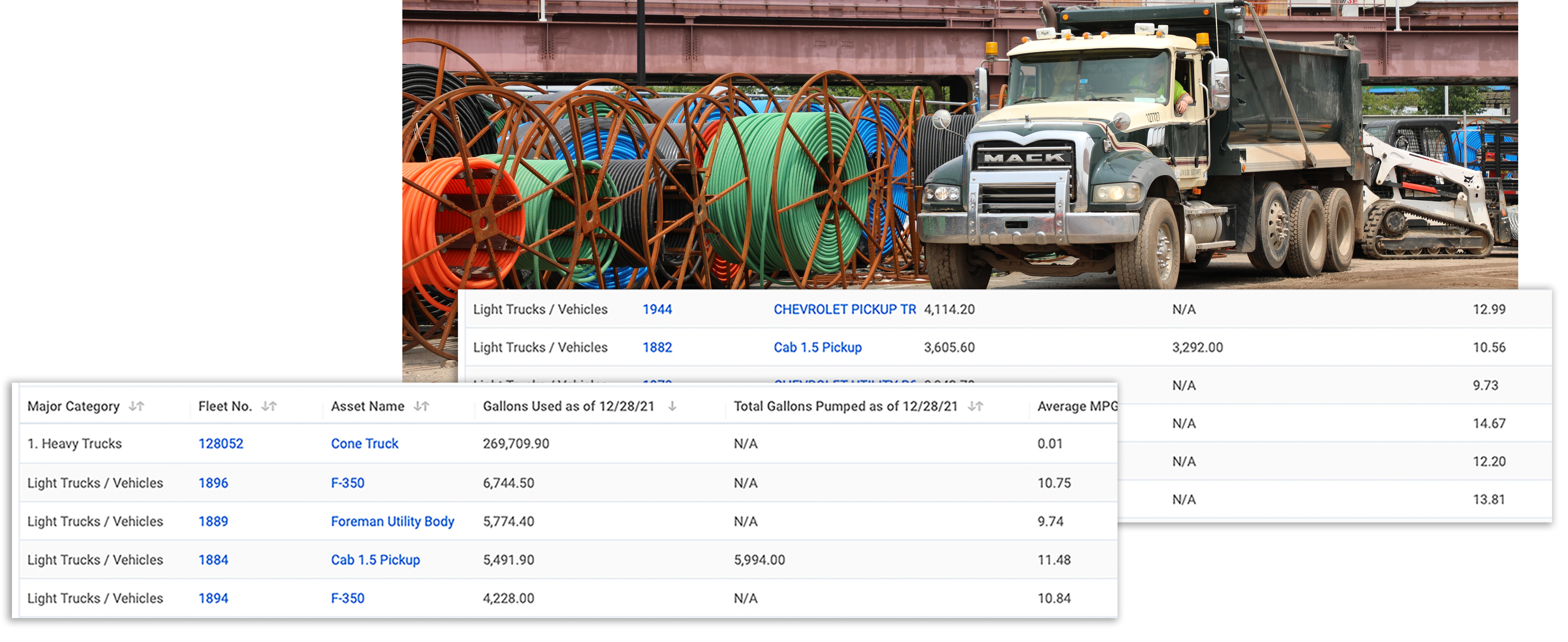
Tenna simplifies record-keeping by automatically logging odometer data, geolocations, and fuel transactions. Its digital dashboard consolidates data, ensuring you have reports backed by time-stamped, GPS-verified data to support audits with confidence, and full traceability for every trip and gallon.
Special IFTA Reporting Scenarios for Fleets
Alternative fuels and bulk fuel use also fall under special reporting scenarios.
- Bulk Fuel: Fuel withdrawn from bulk storage for QMV use can be credited if tax was paid at purchase and accurate records are maintained
- Diesel Exhaust Fluid (DEF) and Refrigeration Unit Fuel: These are not included in IFTA fuel reporting
- Electric and Hydrogen: Must be reported using gallon-equivalent conversions, even if taxed at 0%
Lease Agreements and Fuel Tax Liability
Additionally, for leased assets, responsibility for fuel tax reporting varies by lease type:
- Long-Term Leases (30+ days): Lessee or lessor may report, depending on lease terms.
- Short-Term Leases (<30 days): Lessor generally responsible unless lease specifies otherwise and lessee provides valid IFTA license.
- Household Goods Carriers: Liability depends on whose operating authority the vehicle runs under.
How Tenna Automates IFTA Reporting
Tenna allows contractors to track leased, owned and rental assets all in one platform. Tenna’s system can flag and categorize fuel transactions, configuring reports as needed and reducing errors. Tenna sends reports to the appropriate personnel inbox and helps identify optimization opportunities in your fleet’s fuel strategy.
Environmental Products Group (EPG) needed a single solution to track, maintain and generate IFTA reports for their owned and client rental equipment.
IFTA Penalties and License Revocation
Licenses may be revoked if a carrier fails to:
- File returns or pay taxes
- Respond to audits or pay audit assessments
- Comply with IFTA regulations
Penalties for IFTA Non-Compliance
Driving without a valid IFTA license or trip permit can lead to serious consequences
- Late filing penalty: $50 or 10% of net tax due (whichever is higher)
- Interest: Accrues monthly on unpaid balances
- License revocation: For repeated non-compliance or failure to pay
- Vehicle seizure: Possible in some jurisdictions for operating without valid credentials
To reinstate a revoked license, carriers must file all outstanding returns, pay all taxes, penalties, and fees, and potentially post a security deposit.
How Tenna Helps Avoid Non-Compliance
Automated alerts in Tenna’s platform help fleet managers know about upcoming deadlines and missing data. This greatly lowers the chance of missed filings or revoked licenses.
Jurisdictional Variances Fleet Managers Should Keep in Mind
While IFTA standardizes many procedures, some jurisdictions implement:
- Fuel tax surcharges (e.g., Kentucky, Virginia) not collected at the pump
- Zero-tax rates (e.g., Oregon), which must still be reported
- Unique definitions of tax-exempt miles, which vary and must be documented
IFTA Compliance Best Practices
To maintain compliance:
- File all returns on time
- Keep detailed mileage and fuel records
- Educate drivers on odometer reporting and fuel documentation
- Use digital systems or fleet management tools where possible
- Monitor updates to tax rates and exemptions each quarter

Tenna designed its IFTA tracking software specifically for construction businesses with mixed asset fleets that operate across multiple areas of the U.S and Canada. By integrating vehicle telematics, fuel data, and GPS mileage tracking into a single platform, Tenna:
- Reduces the administrative burden of quarterly filings
- Eliminates error-prone manual entries
- Increases data accuracy for audit protection
- Helps meet jurisdiction-specific requirements automatically
Failure to adhere to IFTA regulations can result in significant penalties and operational disruptions. Staying compliant ensures smooth interstate operations and financial accuracy across jurisdictions.